How to Wash Turkish Towels So They Last a Lifetime

To care for a Turkish towel, wash it in cool or warm water with a gentle detergent, skip fabric softener, and dry it on a line or on low heat. That is genuinely most of the job. A flat-woven peshtemal is a simple, honest textile, and it forgives far more than its luxurious reputation suggests.
We spend our days around these towels, from the first loom run to the final fold, and the questions we hear most often are about what happens after they leave our hands. This guide answers them in the order you will meet them: the first wash, the routine, the rescue jobs, and the long game.
Why do Turkish towels need different care than terry?
A Turkish towel is flat-woven. There are no looped piles to flatten, mat down or hold moisture deep inside. The fabric is thin, dense and open, and the long-staple cotton fibres do the work of absorbing water and then releasing it again quickly.
That structure changes the care rules in three useful ways:
- Less water is trapped, so drying is quick. You rarely need a long, hot tumble cycle.
- There is no pile to crush. Fabric softener, which coats fibres to fake plushness on terry, only makes a flat weave slick and less absorbent.
- The fabric relaxes with use. Washing loosens the yarn and the hand-feel turns from crisp to supple. If you want the background on how that structure is built, our loom-to-logo story walks through it.

How should you wash a brand-new Turkish towel?
Wash it on its own, once, before first use. New cotton carries loose fibre and finishing residue from production, and a separate wash lets that rinse away without lint ending up on your dark jeans or the towel picking up dye from something else.
- Separate by colour. Wash light and dark towels apart for the first few cycles, especially with deeper shades.
- Use cool or warm water. Follow the care label on your specific piece. Cool is the safest default for strong colours, warm is fine for whites and naturals.
- Use a mild detergent, and less than you think. A flat weave rinses cleanly only when it is not overloaded with soap.
- Leave room in the drum. Towels need space to move so the water can flush through them. A half-full machine beats a stuffed one.
- Run an extra rinse if your water is hard or your detergent is thick. Residue is the number one cause of that stiff, papery feel.
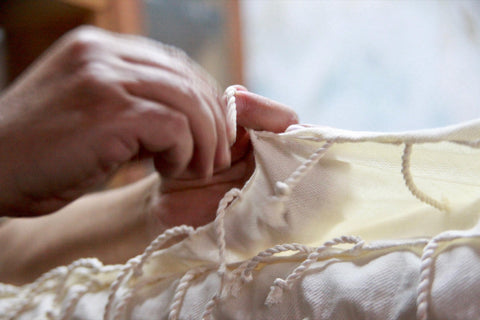
A small point of craft: if your towel has fringe, tie the tassels loosely in groups before washing. It stops them tangling into a knot you will spend an evening untying.

What is the everyday care routine?
After the first wash, you can treat Turkish towels as everyday linens. The routine below suits households, hotels and the gift recipient who will never read a care label.
| Step | Do | Avoid |
|---|---|---|
| Washing | Cool or warm cycle, mild detergent, normal or gentle spin | Hot water on coloured towels, overloading the machine |
| Softening | A splash of white vinegar in the rinse if the towel feels stiff | Fabric softener and dryer sheets, which coat the fibres |
| Stain handling | Rinse promptly with cool water, treat gently, then wash | Chlorine bleach on coloured or woven-in designs |
| Drying | Hang flat or over a line, or tumble on low and remove while slightly damp | High heat for long cycles, which can make cotton harsh and shrink it |
| Storing | Fold when fully dry and keep somewhere ventilated | Packing away damp towels in a closed bag |
Should you use fabric softener on Turkish towels?
No. Softener leaves a waxy film that reduces absorbency, and a flat weave has so little surface structure that you notice the loss straight away. If a towel feels stiff, the cause is almost always detergent residue or hard water, and a vinegar rinse followed by a normal wash is the gentler cure.
Is air drying better than the dryer?
Air drying is kinder and, with a peshtemal, it is also fast. The thin construction can be dry within a short time on a breezy line. The dryer is fine on a low setting. Pull the towels out while a touch of dampness remains and finish them on a hook. Heat is the real variable. Repeated hot, long cycles are what wear cotton down, not the machine itself.
How do you fix common problems?
Most care questions are really troubleshooting questions. Here is how we would approach the usual suspects.
The towel feels stiff or scratchy
Too much detergent, hard water or a crowded drum. Wash with a smaller dose, add an extra rinse, and put one cup of white vinegar in the rinse compartment. Then tumble briefly with a couple of clean tennis balls or dryer balls to help the fibres relax.
It smells musty
Damp storage or detergent build-up is almost always to blame. Wash on a warmer cycle if the care label allows, add a little baking soda to the drum, and make sure the towel is completely dry before it is folded. Do not leave wet towels in a gym bag or beach tote overnight.
The colours look dull
Residue dulls colour the way a film dulls glass. A vinegar rinse and a fresh, lightly soaped wash usually brings the brightness back. Keep strongly coloured and woven-in designs out of direct afternoon sun while drying if you want them to stay rich for years.
The fringe is fraying or tangled
Trim stray threads with sharp scissors rather than pulling them, and tie the fringe in loose bundles before laundering. A little fringe wear is normal and part of the lived-in charm, but a tug on a loose thread can unravel more than you intended.
There is a stubborn stain
Act early. Rinse from the back of the fabric with cool water so the stain is pushed out rather than in, dab a mild detergent solution, let it sit, and wash as normal. Avoid hot water until the stain has lifted, since heat can set it. Test any stain remover on a hidden corner first.
A good peshtemal is not a delicate thing to be protected. It is a working textile that gets better the more it is used.
Do embroidered, jacquard and printed towels need special care?
The same gentle approach works for all of them, but the decoration method is worth a thought. This is a good place to remember why each looks the way it does.
- Jacquard-woven logos are part of the fabric structure, so there is nothing to peel, crack or fade off the surface. They behave like the rest of the towel.
- Embroidery adds texture. Avoid harsh agitation and high heat, and do not iron directly on the stitching. If you need to press the towel, iron on the reverse side.
- Printed designs give colourful, vibrant results. Wash them inside out where possible, use cool water and skip bleach to protect the colour over the long term.
If you are still deciding between those options for a project, our collection page shows what is available, and the team can mock up each approach through virtuals before you commit.
How can you make Turkish towels last for decades?
Longevity comes down to habits, not products. Wash less often than you think you need to (a towel that dries between uses stays fresh), never overload the machine, avoid softener, and keep heat moderate. Rotate between two or three towels so none of them takes all the wear.
Turkish households have long treated textiles as inheritance, and the fabrics reward that attitude. Long-staple cotton from the Aegean region is strong because its fibres are long, which gives yarn that resists pilling and breakage. Well cared for, a towel is a companion for beaches, pools and bathhouses for a very long time.
A small printed care card or a line on the back of a hang tag costs very little and protects your client's brand impression. A towel that stays soft and bright keeps the logo in daily view. Ask us about custom hang tags and branded packaging when you request virtuals.
What about care for towels used in hotels, spas and events?
Commercial laundering is tougher than home washing, so set expectations early. For hospitality programmes, ask your laundry partner to use moderate temperatures, measured detergent and a thorough rinse, and to avoid softener and heavy bleach. The quick-drying nature of flat-woven cotton helps laundries, because dry times and energy use are naturally lighter than for dense terry. Our story on towels that give back explains the ocean-conscious mission behind our towels, which is a natural fit for resort and beachside programmes.
Frequently asked questions
How often should I wash a Turkish towel?
After a few uses, as long as it dries fully between uses and hangs somewhere airy. Wash straight away after the beach, pool or any time it has stayed damp, because salt, chlorine and damp storage are what cause odours and wear.
Will my Turkish towel shrink?
Cotton can relax or shrink slightly the first few times, especially with hot water and long dryer cycles. Washing in cool or warm water and drying gently keeps it minimal. Always check the care label on your piece.
Can I iron a Turkish towel?
Yes, if you want a crisp, folded presentation. Use a medium setting while the towel is slightly damp, and iron embroidered areas from the reverse side so the stitching keeps its texture.
Why does my new towel shed lint?
New cotton releases loose fibres during the first few washes. Wash it separately, add an extra rinse, and the shedding settles down quickly.
Is a Turkish towel really softer after many washes?
Generally yes. The flat weave relaxes and the cotton fibres open up with each laundering, so the towel becomes more supple and drapes better over time, provided you avoid softener and excessive heat.
Give your logo a longer life
Towels that are easy to care for stay in use, and stay seen. Explore what we have in stock or tell us about your next project and we will help you plan it.
See available inventory Talk to our team