Sustainable Promotional Products: Natural Fibers & Recycled Yarn

The most sustainable promotional product is the one that is still in use five years later. Material matters, but longevity matters more: a well-made cotton towel that lives in a beach bag for a decade beats a recycled novelty that is binned after the event. This guide walks through how to think about natural fibres, recycled yarn and honest messaging, so you can advise clients without falling into greenwashing.
What does "sustainable" actually mean for promo products?
It is not one thing. When a client asks for a sustainable item, they may mean any of these:
- Made from natural or renewable fibre, such as cotton.
- Made from recycled content, such as recycled polyester yarn.
- Built to last, so it is not replaced and thrown away.
- Useful, so it is not forgotten in a drawer.
- Linked to a cause, such as protecting the environment.
These do not always point in the same direction. A cheap recycled item that falls apart is worse in practice than a durable natural one. A natural fibre grown and processed carelessly is not automatically good. Your job as the advisor is to help the client choose which of these matters most to them, then pick the product accordingly.
Why do natural fibres make a strong case?
Cotton is a natural, renewable fibre, and long-staple cotton has an extra advantage: longer fibres spin into smoother, stronger yarn. We use long-staple cotton from the Aegean region of Turkey, a region long associated with fine cotton. A yarn like that resists pilling and wears gracefully, which is the practical foundation of a sustainability story: a product that holds together.
Natural fibres also feel better over time. A flat-woven Turkish towel tends to soften with washing rather than deteriorate, and that is exactly the quality that makes someone keep it. For a deeper look at the cloth itself, see From Loom to Logo.
The honest caveats
Cotton is a thirsty crop, and the footprint of any textile depends on how it is farmed, dyed, finished and shipped. We do not hold or claim third-party eco certifications in this article, and neither should anyone who cannot show the paperwork. What we can say plainly is that cotton is a natural fibre, that our cotton is long-staple, and that these towels are designed to be used for years.
What about recycled yarn?
Recycled content has a different appeal. Among the knit blanket yarns we offer, acrylic is made with recycled polyester. It gives a bumpy, soft handle and sits at the entry price point. It keeps existing material in use and gives clients a more accessible budget.
Think of it this way:
- Choose recycled acrylic when budget is tight and the story of reusing material is the point.
- Choose cotton when you want a natural fibre, crisp artwork and a premium feel.
Neither is a universal winner. Our yarn comparison guide sets out the full line-up, including feather and chenille, which are chosen mainly for their feel and effect.
| Option | Where the sustainability story comes from | Watch out for |
|---|---|---|
| Cotton knit or woven | Natural fibre, smooth finish, high artwork resolution | Do not imply certifications you do not hold |
| Recycled-poly acrylic | Recycled content, accessible price | Explain it as recycled content, not as a natural fibre |
| Flat-woven Turkish towel | Natural fibre, long life, light to ship and pack | Longevity is the claim, not a measured number |
How do you avoid greenwashing?
Clients are increasingly alert to vague green language, and so are their customers. A few ground rules protect everyone:
- Be specific. "Made from cotton" is a fact. "Eco-friendly" without a reason is a slogan.
- Do not invent numbers. Percentages of water saved or carbon offset must come from a source you can show.
- Do not borrow badges. If a product does not hold a specific certification, do not display one.
- Name the trade-off. Saying "recycled content, softer handle, lower price" earns more trust than pretending a product has no downside.
- Focus on use. A product that is used often has a smaller footprint per use.
The greenest claim you can make is also the plainest: this was built to be kept.
Does the way a towel is made matter?
It does, and small makers have a story worth telling. Our flat-woven towels come from small, family-run mills in Turkey. Production at that scale tends to be careful and craft-led rather than throwaway. Each piece is inspected, pressed, folded and packed, which means problems are caught before they leave, not after they reach an end customer.
Read more about how we work with these makers in our loom-to-logo story.

Where does the ocean come in?
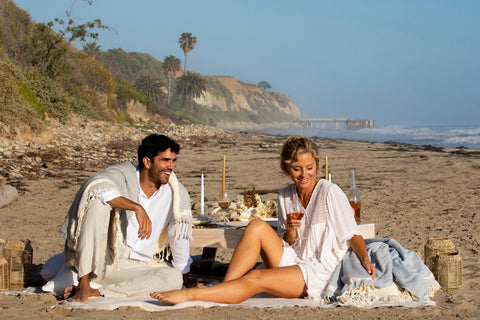
Our mission is to help heal and protect the oceans. That connection is natural for products used near beaches, pools, resorts and coastlines, which is where our towels, blankets, robes and beach bags spend their lives. For clients with a coastal or environmental message, the product itself becomes part of the story: a lasting item that sits in the setting the campaign is trying to protect.
We talk about this in more detail in Custom Turkish Towels That Give Back. Please check the details of any program with us directly before making specific claims in your own client materials.
How can packaging support the same goals?
Packaging is the most visible part of a product and the part most likely to be thrown away. A thoughtful approach keeps it simple. Options we offer include custom hang tags, woven labels, branded belly bands or sleeves and personalised packaging. A belly band, for instance, can carry the brand and the care message with far less material than a rigid box. Keeping the packaging light also keeps the focus on the product, which is the thing you want the recipient to keep.
Choose packaging that earns its place. If it will be discarded in seconds, ask whether it needs to be there.
How can distributors present sustainable options to clients?
Start with the client's actual goal, then build a short ladder of options. For example:
Budget-led, recycled story
A knit blanket in recycled-poly acrylic, with a clear note that it uses recycled content. It suits events and large-quantity giveaways.
Premium, natural-fibre story
A cotton blanket or a Turkish cotton towel with a woven logo, packed with a hang tag. It suits executive gifts, resort programs and brand collaborations.
Mission-led story
A beach towel or tote with coastal artwork and a message about ocean care. It suits nonprofits, tourism boards and schools.

Mixing styles is workable too: pooled quantity price breaks mean that a program with several items can still benefit from volume. You can browse the full collection to shortlist products.
"We can offer a recycled-content option at a friendly price, or a natural-fibre option built to last. Which matters more to your audience: the story of reuse, or the story of longevity?" That one question usually settles the brief.
What should you ask a supplier about sustainability?
- What is the fibre, and where does it come from?
- Is any recycled content involved, and in which component?
- Which claims can be backed up with documents, and which are descriptive only?
- How long should the product last in normal use?
- Can the packaging be simplified?
A good partner answers these plainly and tells you when they do not know. If you want to check available items and materials, our inventory page is a good starting point, and you can contact us with specific questions.
Why does usefulness beat novelty?
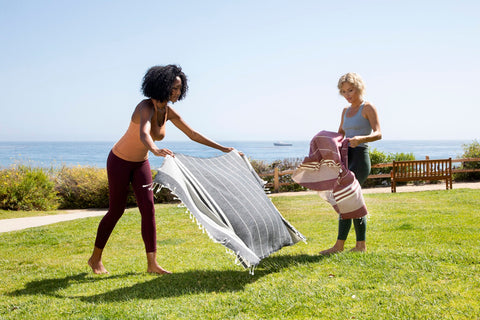
Every promotional product has a hidden question attached: will this be used? A branded gadget that works for a week and then lands in a drawer has a footprint but no purpose. A towel, by contrast, has a job every single day. It dries a body after a swim, wraps a shoulder on a cool evening, covers a lounger, or becomes a picnic blanket. Each time, it carries the logo into a new setting.
That is why textiles are such a natural fit for clients who care about impact. The product is not trying to be clever. It is simply good at something people already do, and it improves with washing rather than breaking down. When you pitch it, lead with that practical truth, then add the material story as support, not as the headline.
Questions that reveal real intent
Before you quote, ask the client three things. Who is the recipient, and will they use this weekly? Where will it be used, at home, at the pool, on the road? Does the program have a story, such as a cause, a campaign or a milestone, that the product can reflect? Their answers tell you whether to lean on durability, on recycled content, or on the mission behind the gift.
Think about the second life
A good heirloom-style textile gets passed on, reused as a throw, or kept as a souvenir. You can encourage that by designing a mark that is attractive rather than shouty, since people keep what they are happy to display. A tasteful woven logo that looks at home in a living room has a much longer life than a loud slogan.
Frequently asked questions
Are cotton towels sustainable promotional products?
Cotton is a natural, renewable fibre, and a well-made long-staple cotton towel is built to last for years, which is the most practical sustainability argument. Responsible messaging should stay specific and avoid claims you cannot document.
Is recycled acrylic yarn a good choice for blankets?
It is a good choice when you want recycled content at an accessible price. Our acrylic yarn uses recycled polyester and has a bumpy, soft feel. It is not a natural fibre, so describe it accurately.
Do you claim eco certifications?
We do not make certification claims in our educational content. If a client needs a specific certification, ask us directly through the contact form so we can answer accurately.
How does the ocean mission relate to the products?
Our mission is to help heal and protect the oceans, and our products are used near beaches, pools, resorts and coastlines. Clients can pair a durable product with their own coastal or environmental message.
Build a program you can stand behind
Tell us your client's goal and budget, and we will suggest materials and decoration that tell an honest story.
Browse inventory Ask a question